Emergency Generator Guide: Securing Uninterrupted Power for Your Home and Business
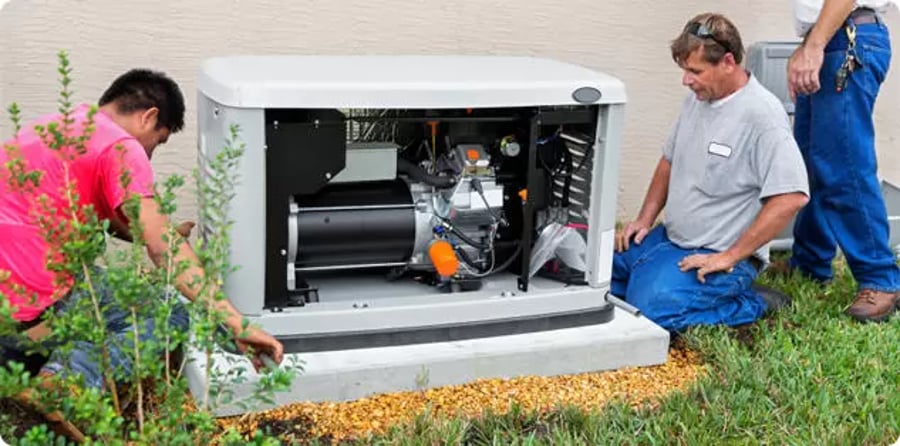
The Two Primary Generator Solutions: Standby vs. Portable
The first decision in securing your power future is choosing the right type of generator that aligns with your lifestyle, budget, and power requirements.
| Feature | Home Standby Generator (HSBG) | Portable Generator |
| Installation | Permanent fixture outside the home, similar to an HVAC unit. | Wheeled unit that must be manually moved and connected. |
| Operation | Automatic. Turns on within seconds of an outage via an Automatic Transfer Switch (ATS). | Manual. Requires starting the engine, running extension cords, or connecting a manual transfer switch. |
| Power Output | High. Typically 7kW to 26kW+ for residential use; capable of powering entire homes (including HVAC/AC units). | Low to Medium. Typically 2kW to 12kW; designed to power select essential appliances. |
| Fuel Source | Plumbed into Natural Gas (NG) line or large Liquid Propane (LP) tank. Continuous run-time. | Gasoline, smaller LP tanks, or Diesel. Limited by fuel on hand. |
| Cost | High (System + Installation: $7,000 - $20,000+) | Low (Unit only: $500 - $3,000) |
| Best For | Whole-house coverage, long-duration outages, families with medical needs, high-value homes, and small businesses. | Temporary power for camping, job sites, and basic home essentials (fridge, lights). 导出到 Google 表格 |
Whole House Standby Generators (HSBGs) offer the ultimate peace of mind. They are wired directly into your electrical system and a fuel source, initiating automatically. This seamless, 'set-it-and-forget-it' operation is critical for maintaining home comfort (including central air conditioning), protecting sensitive electronics, and preventing damage from frozen pipes in cold climates.
Portable Generators are budget-friendly and versatile but require manual effort and carry the risk of fuel handling and carbon monoxide exposure if not used carefully outdoors. They are best suited for minimal, temporary power needs.
Sizing Your Generator: The Power Calculation Formula
Choosing the correct generator size (rated in Watts or Kilowatts (kW)) is the most crucial step. A generator that is too small will stall under load, and one that is too large is an unnecessary expense. You must account for both Running Watts and Starting Watts (or Surge Watts).
The Three-Step Sizing Method:
List Running Watts (R): Identify every essential appliance and system (refrigerator, well pump, furnace, lights, computer) you wish to run simultaneously during an outage. Find the wattage listed on the appliance's tag or in the manual and add them all together. This total is your Continuous Running Wattage.
Determine Peak Starting Watts (S): Identify the single appliance on your list with the highest Starting Wattage requirement. Appliances with motors (AC units, refrigerators, well pumps) require a brief surge of 2 to 3 times their running wattage to start. You only need to account for the single highest surge because not all motorized items will start at the exact same moment.
Calculate Total Required Watts: Add your Continuous Running Wattage (Step 1) to the single-highest Starting Wattage (Step 2). Total Required Watts=∑Running Watts+Highest Single Starting Wattage
Add a Safety Margin: Once you have the total, add a 10% to 20% buffer to ensure the generator never runs at its absolute maximum capacity. This prevents wear and tear, improves fuel efficiency, and accounts for minor loads like chargers and electronics.
Example: If your essential appliances total 5,000 Running Watts, and your well pump has the highest surge at 2,500 Watts, your Total Required Watts is 7,500 Watts. Add a 20% margin: 7,500×1.20=9,000 Watts (or 9kW). This is the minimum size you should purchase.
Fuel Sources: Runtime, Availability, and Efficiency
The choice of fuel directly impacts runtime, storage requirements, and ease of use, especially during prolonged emergencies.
| Fuel Type | Pros | Cons | Best Suited For |
| Natural Gas (NG) | Unlimited runtime (plumbed supply), low emissions, no storage needed. Ideal for urban/suburban homes with an existing gas line. | Power output is typically reduced by 10% to 15% compared to Propane/Diesel. Requires professional gas line connection. | Home Standby Generators (HSBG) |
| Liquid Propane (LP) | Long shelf life, safer to store than gasoline, fuel can be stored on-site in tanks. Used widely in rural and suburban areas. | Finite supply (limited by tank size), larger tank required for long outages. | HSBG, Dual-Fuel Portable Generators |
| Diesel | Most fuel-efficient, high power density, best for large commercial or industrial generators. | Requires a dedicated tank and regular fuel stabilization; delivery can be challenging during emergencies. | Commercial, Industrial, and High-Output Backup Systems |
| Gasoline | Widely available at gas stations, high energy output (compared to NG/LP). | Very short shelf life (3-6 months), highly flammable, difficult/dangerous to store large quantities. Never use for standby. | Small Portable Generators |
| Dual-Fuel | Provides flexibility to switch between LP and Gasoline, solving fuel availability issues during a crisis. | LP offers a lower power output than Gasoline. | High-End Portable Generators 导出到 Google 表格 |
For whole-house standby power, Natural Gas and Propane are overwhelmingly the preferred choices due to their long runtime and low maintenance requirements.
Critical Features and Technologies for Modern Reliability
Today's generators are smart, efficient, and designed to minimize disruption. When comparing models, prioritize these non-negotiable features:
The Transfer Switch (ATS): The Brain
The Automatic Transfer Switch (ATS) is what distinguishes a true standby generator. It continuously monitors utility power. When power drops, the ATS:
Signals the generator to start.
Once the generator is stable, it safely switches the home's electrical load from the utility line to the generator.
When utility power is restored, it switches the load back and signals the generator to shut down. The size of the ATS (e.g., 100-amp, 200-amp) determines how much of your home's electrical panel can be backed up. A Whole-House ATS (200-amp) is ideal for full coverage.
Load Shedding
This technology manages high electrical demand by temporarily shutting down non-essential, high-wattage items (like a second A/C unit or an electric clothes dryer) to ensure essential systems (like the refrigerator and furnace) continue to run. This allows you to purchase a smaller, more cost-effective generator while still protecting core functions.
Remote Monitoring (Wi-Fi/Cellular)
Modern standby generators include Wi-Fi or cellular connectivity. This allows you to monitor the generator's status, fuel level, maintenance schedule, and run-time hours from a smartphone app, receiving instant alerts if a problem occurs. This feature is invaluable for off-site owners or those traveling frequently.
Enclosure and Noise Rating
A high-quality generator will feature a robust, weather-resistant aluminum enclosure to protect it from the elements. Furthermore, look for generators with low Decibel (dB) ratings, often utilizing sound-dampening enclosures to minimize neighborhood noise disruption during long-duration use.
Installation and Code Compliance: Hire a Professional
Installing a standby generator is not a DIY project; it is a complex process that requires expertise in three distinct trades:
Electrical: A licensed electrician must connect the generator and the Automatic Transfer Switch to your home's main electrical panel and ensure all wiring meets local code.
Plumbing: A licensed plumber must handle the connection of the gas line (Natural Gas or Liquid Propane) from the supply tank or utility line to the generator's engine.
Site Preparation: The generator must be installed on a level, stable surface (often a concrete pad) and adhere to local setback requirements concerning property lines, windows, and flammable materials to prevent fire and carbon monoxide hazards.
Failing to comply with local permitting and building codes can void your home insurance, lead to costly fines, or, more critically, create a dangerous situation for you or utility workers. A certified, authorized dealer and installer will handle all permits, inspections, and regulatory compliance, ensuring a safe and reliable installation.